Specify a module and the enclosure around it
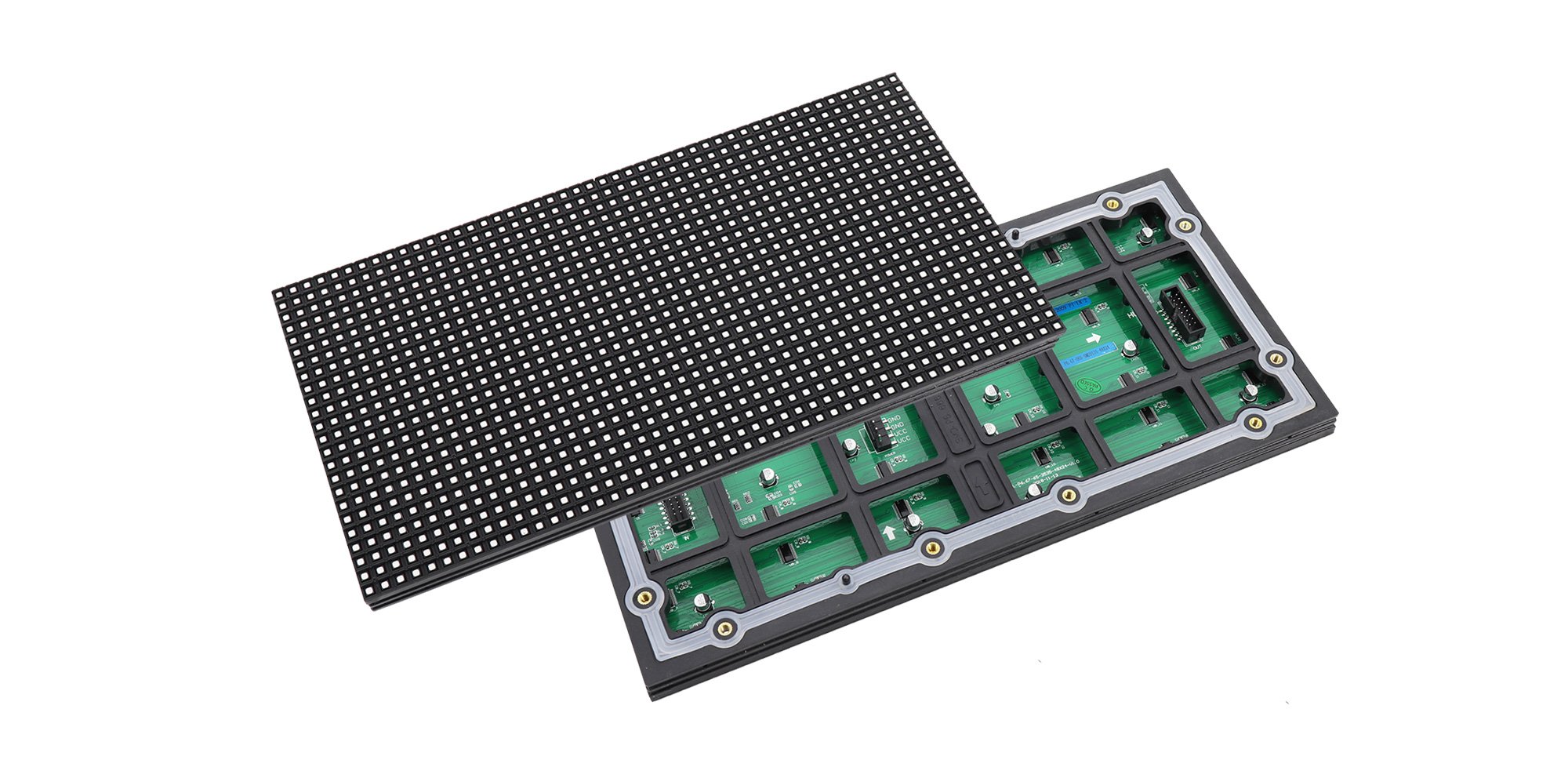
EagerLED’s outdoor module catalog contains several physical formats and electrical variants for building or repairing outdoor LED screens. The range includes rectangular SMD panels, square cable and HUB modules, and separate DIP entries. A shared pitch does not establish an identical product: the source lists multiple modules at the same pitch with different scan duties, brightness values and package types. Outdoor module specifications.
For a new screen, work from the installation’s dimensions, viewing positions and daylight conditions. For a repair, work from the installed module’s complete identification and construction. The LED module category separates these outdoor families from indoor and flexible module selections.
The manufacturer describes IP65 protection for the outdoor modules. Outdoor module protection. The finished display also depends on its cabinet, joints, cable entries and assembly. Obtain the protection specification for the complete supplied system. A module-level statement should not become an unsupported rating for a custom enclosure.
Rectangular 320 × 160 mm variants
The primary rectangular table lists the following variants at 3840 Hz refresh. The duplicate P5 rows are separate package configurations, and the two P10 rows use different package and driving arrangements. Retain those differences when comparing proposals. 320 × 160 specifications.
| Pitch and package | Module resolution | Driving duty | Listed brightness |
|---|---|---|---|
| P1.86 SMD1010 | 172 × 86 pixels | 1/43 | 4000 nits |
| P2 SMD1415 | 160 × 80 pixels | 1/40 | 4000 nits |
| P2.5 SMD1415 | 128 × 64 pixels | 1/16 | 5000 nits |
| P3.076 SMD1415 | 104 × 52 pixels | 1/13 | 5000 nits |
| P4 SMD1921 | 80 × 40 pixels | 1/10 | 5500 nits |
| P5 SMD2727 | 64 × 32 pixels | 1/8 | 6000 nits |
| P5 SMD1921 | 64 × 32 pixels | 1/8 | 5500 nits |
| P6.67 SMD3535 | 48 × 24 pixels | 1/6 | 6000 nits |
| P8 SMD3535 | 40 × 20 pixels | 1/5 | 5500 nits |
| P10 SMD3535 | 32 × 16 pixels | 1/2 | 5800 nits |
| P10 DIP346 | 32 × 16 pixels | 1/4 | 8000 nits |
The listed brightness belongs to each row; it is not a measured result for a completed screen at the user’s site. Confirm the operating brightness with the proposed power and control configuration. The finer pitches provide more pixels within the same module footprint, but the appropriate choice depends on the message and nearest intended viewer.
Large lettering on an outdoor sign and detailed imagery beside a pedestrian route need different content tests. Show the supplier a typical layout and its smallest required text. The proposal should include the total screen matrix so the content operator can judge how much information will remain readable.
Square cable and HUB modules
The 250 × 250 mm cable and HUB tables each contain the five variants below. They list the same matrix, duty and brightness pairs, with 3840–7680 Hz refresh entries. The connection systems remain separate configurations even where the visual specifications match. Square outdoor module tables.
| Square variant | Module resolution | Driving duty | Listed brightness |
|---|---|---|---|
| P2.6 SMD1415 | 96 × 96 pixels | 1/24 | 4500 nits |
| P2.97 SMD1415 | 84 × 84 pixels | 1/21 | 4500 nits |
| P3.91 SMD1921 | 64 × 64 pixels | 1/16 | 4800 nits |
| P3.91 SMD1921 | 64 × 64 pixels | 1/8 | 6000 nits |
| P3.91 black SMD1921 | 64 × 64 pixels | 1/8 | 4000 nits |
A request for “P3.91 outdoor, 250 square” leaves three documented choices unresolved before connection type is considered. Include the exact package description, scan duty and cable or HUB format. Ask for the delivered refresh setting and matching control parameters rather than assuming the top of the published range applies automatically.
The catalog also lists flexible HUB modules in this square size at P2.6, P2.97 and P3.91. Their refresh entry is 3840 Hz, and the P3.91 row is the 1/16-duty, 4800-nit configuration. Do not carry the rigid-series 7680 Hz upper entry or 6000-nit P3.91 value into the flexible row. Flexible outdoor specifications.
Other formats have separate operating rows
Narrow 80 × 160 mm modules are listed at P4, P5, P6.67, P8 and P10. They provide different physical building blocks from the wide rectangular series. The catalog also includes 288 × 288 mm HUB modules and 192 × 192 mm panels, plus smaller rectangular and square formats. Select from the actual cabinet drawing rather than treating these shapes as interchangeable alternatives. Outdoor module sizes.
Some additional DIP rows list 1920 Hz refresh, unlike the 3840 Hz entry for the 320 × 160 mm DIP panel above. The source also has a separate series labeled energy-saving, but its table does not supply the wattage data needed to calculate a saving. Request electrical data for that exact series before making an operating-cost comparison. Additional outdoor formats.
A flexible mask is another source-table distinction. It describes the listed mask arrangement and should not be read as a confirmed bending capability for the complete module. Curved assembly requires its own approved support and module configuration.
Build service and weather protection into the design
| Project need | Module decision | System detail to confirm |
|---|---|---|
| Repair an existing outdoor cabinet | Match the complete installed module row | Mounting, gasket, connectors and stored control settings |
| Build a new fixed sign | Select size and pixel matrix around the cabinet grid | Enclosure protection, cable entries and service access |
| Use square modules in an event screen | Choose cable or HUB format | Approved cabinet interface and repeated assembly procedure |
| Compare same-pitch brightness options | Identify package and scan duty | Quoted operating setting, electrical load and sample appearance |
| Plan a curved outdoor surface | Select an explicitly approved flexible variant | Bend limits, support structure and sealing arrangement |
For replacement work, photograph the gasket and mounting points as well as the electrical labels. The installer should confirm how the replacement restores the intended seal. Ask for the specified fasteners and installation procedure rather than copying a fit that merely looks similar.
Decide how technicians will reach the module after the display is installed. Service may depend on the cabinet and support arrangement, not just on the panel. A sign that is easy to assemble on a bench can become difficult to maintain once surrounded by cladding. Locate power and signal connections where the agreed procedure can reach them.
Complete cabinet families such as the EA1000TOF2 and EA1000F2 are useful comparisons when the project needs an assembled display system. For indoor work, use the separate indoor module family rather than selecting an outdoor row solely for its brightness.
Outdoor module questions
Why are there several P3.91 square rows?
The source separates 1/16-duty, 1/8-duty and black-package configurations, with different brightness entries. Cable and HUB versions also have distinct designations. Specify the whole row. Square outdoor module tables.
Does every outdoor module run at 7680 Hz?
No. Some rigid square series list a 3840–7680 Hz range, many rectangular rows list 3840 Hz, and certain additional DIP rows list 1920 Hz. Confirm the exact supplied configuration. Outdoor refresh specifications.
Does module IP65 establish a cabinet rating?
No. Obtain the rating and assembly details for the finished enclosure, including its rear access and cable entries. The module statement covers only part of that design. Outdoor module protection.
Can the module table determine electricity use?
The selected tables list brightness and scan settings but do not provide complete power data. Request the module’s electrical requirements and the assembled system’s maximum load before estimating consumption.
What information makes a quote usable?
Send the exact size, pitch, package and connection choice with the quantity through the module quote request. For a repair, add photographs and existing configuration details. For a new screen, add the cabinet layout, service method and installation environment.
CHECK THE DETAILS
Sources & references
Source pages can change. Access dates record when they were consulted.
- Outdoor module specifications Accessed 28 September 2026
Discuss Outdoor LED module family for your project.
Share the application, destination and screen dimensions to request a configuration and written quotation.
Request a project quote