Quick answer
COB (chip on board) mounts bare LED chips directly on the circuit board under a sealed surface; SMD (surface-mounted device) solders individually packaged LEDs onto the board, and GOB adds a glue coating over SMD for protection. At the same pitch on the same cabinet, COB usually costs a little more: on the EA640F2, P1.86 is US$865 per m² in GOB and US$872 in COB, and P1.53 is US$1,096 against US$1,223. COB also draws less average power at P1.53 and P1.86. Choose COB for close-view, touchable fine-pitch walls; SMD and GOB remain the better value for most walls at P1.86 and coarser.
Sources used: Indoor LED Display Screen Price: Buyer’s Guide; EA640F2 Indoor LED Display; EA600COB3 16:9 Indoor COB LED Screen
Neither label settles the purchase. Compare the exact products for pitch, low-brightness image, surface uniformity, repair method, spares and complete price.
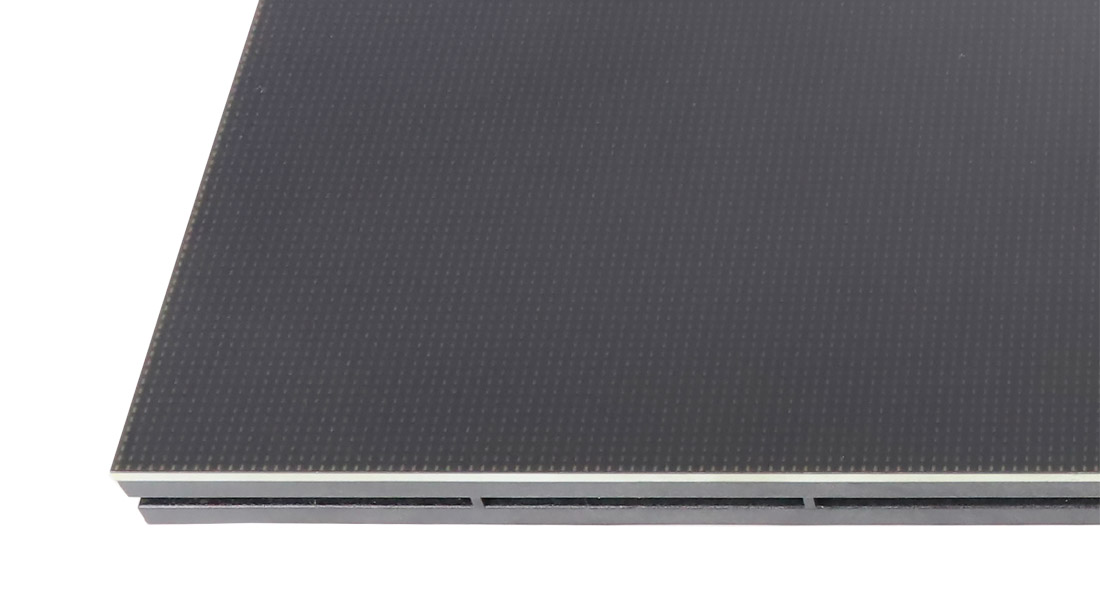
COB vs SMD price at the same pitch
The EA640F2 640 × 480 mm cabinet is offered with both SMD (GOB) and flip-chip COB modules, so the price difference is not hidden by different cabinets.
| Pitch | GOB (SMD) price per m² | COB price per m² | COB premium |
|---|---|---|---|
| P1.86 | US$865 (US$80 per sq ft) | US$872 (US$81 per sq ft) | +1% |
| P1.53 | US$1,096 (US$102 per sq ft) | US$1,223 (US$114 per sq ft) | +12% |
| P1.25 | US$1,515 (US$141 per sq ft) | US$1,584 (US$147 per sq ft) | +5% |
Reference ex-factory prices from the EagerLED Aug 2026 price list, in USD, for the standard configuration; final pricing is subject to a formal quotation. They cover display hardware only.
For a 3.84 × 1.92 m (12.6 × 6.3 ft) wall of 24 cabinets (7.3728 m², 79.4 sq ft), the difference is small at P1.86 (US$6,377 GOB against US$6,429 COB) and larger at P1.53 (US$8,081 against US$9,017). At P1.25 the wall costs US$11,170 in GOB and US$11,679 in COB, with a 3072 × 1536 canvas.
The dedicated 16:9 COB cabinet, EA600COB3, reaches pitches SMD rarely offers: P0.93 at US$3,300 per m², P0.78 at US$6,339 and P0.62 at US$13,227. At P1.25 it costs US$1,747 per m². For every indoor price, see the indoor LED screen price guide.
The construction difference
| SMD | GOB (SMD + glue) | COB | |
|---|---|---|---|
| LED | Packaged LED soldered to the board | Same packaged LED | Bare chip bonded to the board |
| Surface | LEDs stand proud of the board | Clear glue layer over the LEDs | Flat, sealed surface over the chips |
| Touch and knocks | Most exposed | Protected by the coating | Protected by the sealed surface |
| Typical pitch | Every pitch, indoor and outdoor | Indoor fine pitch, about P1.25–P2.6 | Indoor fine pitch, down to P0.62 |
| Repair | Single LEDs or modules replaceable | Usually module replacement | Usually module replacement |
Ask for a sample of the offered module and a written description of its protective surface, cleaning method and repair process, and confirm what the warranty covers when a person touches or damages the display.
Power: COB draws less at the same pitch
EagerLED’s EA640F2 specifications list lower power for COB at the two coarser fine pitches:
| EA640F2 pitch | GOB maximum / average | COB maximum / average |
|---|---|---|
| P1.86 | 330 / 110 W/m² | 230 / 80 W/m² |
| P1.53 | 300 / 100 W/m² | 280 / 95 W/m² |
| P1.25 | 300 / 100 W/m² | 300 / 100 W/m² |
For the 7.37 m² wall at P1.86, that is about 0.81 kW average for GOB and 0.59 kW for COB. Over 12 hours a day, the COB wall uses roughly 970 kWh a year less, which over several years can offset its small price premium. The ultra-fine EA600COB3 P0.62 and P0.78 list just 140 W/m² maximum and 50 W/m² average.
Compare what changes for the buyer
| Decision | COB questions | SMD / GOB questions |
|---|---|---|
| Physical exposure | What does the surface resist, and how was it tested? | Are LEDs exposed to contact at the planned height? |
| Black level | Is the surface matte under the room’s lighting? | How much dark mask is visible at the offered pitch? |
| Repair | Is repair by module, board or factory return? | Can local technicians replace modules or LEDs? |
| Spares | Must replacements come from a calibrated batch? | How are batch and colour differences managed? |
| Cost | Are surface treatment, calibration and spares included? | Does the lower quote use the same components and controls? |
Claims such as “impact resistant”, “anti-glare” or “washable” need a named test, rating or care instruction. For the GOB option in detail, see GOB vs SMD for an indoor LED wall.
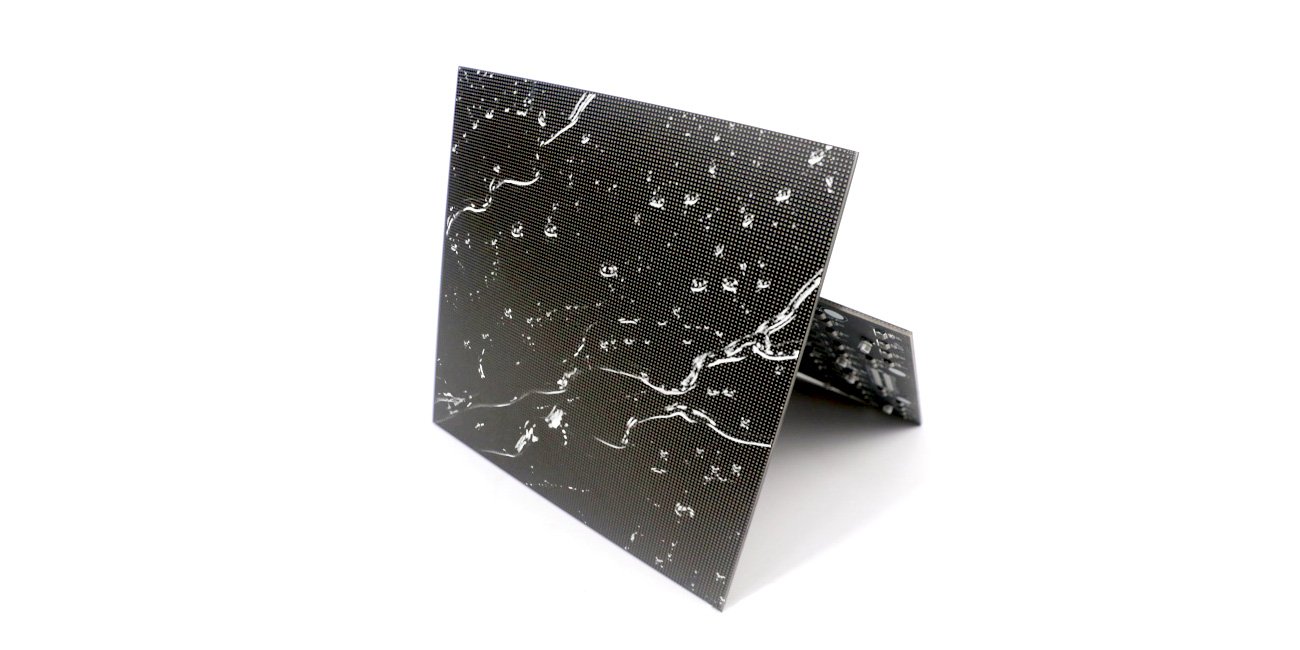
Image quality needs a controlled comparison
View both candidates at the same size, pitch, resolution, input, brightness and room light. Use dark scenes, white backgrounds, skin tones, small text and slow gradients, and stand at the nearest and typical viewing positions. If cameras will record the wall, test the production camera at the intended frame rate and shutter.
Look for module boundaries, reflections, colour shift off-axis and dark-scene detail. Photographing two screens with automatic camera exposure can mislead, because the camera changes settings between shots.
Service can outweigh the purchase difference
Ask a technician to demonstrate module removal, power-supply access and receiving-card replacement, and record the time, tools and clearance. Get the warranty workflow in writing: who diagnoses, who pays freight, whether the wall stays on while one module is out and how replacements are calibrated. COB spare modules for EA600COB3 cost US$24–US$324 depending on pitch; the LED wall calibration cost guide covers spares and colour matching.
EagerLED recommends comparing COB and SMD as complete systems rather than by panel price alone: control hardware, structure, installation, spares, commissioning and support.
A practical choice
Choose COB when viewers sit close, when people can touch the wall, or when you need P1.25 or finer, and the offered product’s surface and service plan justify the price. Choose SMD or GOB when the product meets the visual requirement at P1.86 or coarser and its module service and wider choice give better value. Name the technology and exact product revision in the order; accepting “COB equivalent” invites a different construction after approval. The fine pitch vs standard LED comparison helps decide whether you need fine pitch at all, and how to compare LED screen quotes keeps bids comparable.
Frequently asked questions
Is COB more expensive than SMD?
Slightly, at the same pitch and cabinet: 1–12% on the EA640F2, for example US$872 against US$865 per m² at P1.86. Below P1.25, COB is often the only option.
Is COB always finer pitch than SMD?
No. Both overlap from about P1.25 to P1.86. Compare the offered pitch and total resolution rather than assuming the package type defines them.
Does COB use less power?
On the EA640F2 it does at P1.86 (80 against 110 W/m² average) and P1.53 (95 against 100 W/m²), and equals GOB at P1.25.
Is SMD unsuitable for public spaces?
No. Risk depends on pitch, mounting height, barriers and contact. GOB coating or a mounting height out of reach can protect SMD walls.
Which is easier to repair?
SMD can sometimes be repaired LED by LED; COB and GOB are usually repaired by swapping the module. Confirm the repair method and spare supply for the exact product.
Check the details
Sources & references
Source pages can change. Access dates record when they were consulted.
- Indoor LED Display Screen Price: Buyer’s Guide Accessed 29 October 2026
- EA640F2 Indoor LED Display Accessed 29 October 2026
- EA600COB3 16:9 Indoor COB LED Screen Accessed 29 October 2026
Put these details into your project brief.
Tell EagerLED the application, destination and screen dimensions you have in mind.
Request a project quote