Quick answer
A jumbotron is the giant video screen at a stadium, arena, concert or fan zone that shows live action, replays, scores and sponsor content to a crowd. Almost every new jumbotron is a direct-view LED video wall built from modular cabinets, so it can be made to any size in whole cabinets.
Sources used: What is a jumbotron; Jumbotron screen guide; Jumbotron buying guide; EA1000F2 specifications; EA640F2 specifications
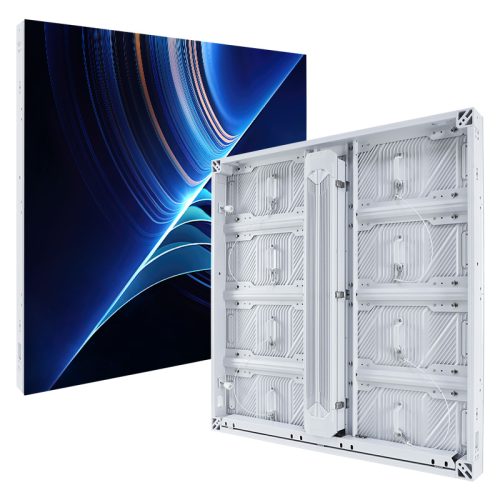
What a jumbotron costs depends mostly on its area and pixel pitch. Using EagerLED’s EA1000F2 outdoor cabinets (1 × 1 m, 6,500 cd/m²), the screen alone costs:
| Jumbotron size | Typical use | Screen price (P10.41–P6.25) |
|---|---|---|
| 6 × 3 m (19.7 × 9.8 ft) | Fan zone, small field, club ground | US$12,942–US$14,508 |
| 8 × 5 m (26.2 × 16.4 ft) | High school or community stadium | US$28,760–US$32,240 |
| 12 × 7 m (39.4 × 23.0 ft) | College or minor-league stadium | US$60,396–US$67,704 |
| 20 × 11 m (65.6 × 36.1 ft) | Large stadium end-zone board | US$158,180–US$177,320 |
An indoor arena’s four-sided, center-hung jumbotron with 7.68 × 4.32 m faces costs US$67,815–US$90,774 for the screen. Steel structure, power distribution, the video processor, playback, freight and installation are priced on top, and they vary by site.
What is a jumbotron?
The word started as a product name. EagerLED’s What is a jumbotron guide traces it to a giant screen shown at the 1985 international exposition in Tsukuba, Japan; the original technology was not LED. The name stuck, and “jumbotron” now means any very large video screen that a crowd watches together, whoever made it.
A modern jumbotron is a tiled LED display. LED modules sit inside cabinets, the cabinets lock together into one surface, and a video processor maps the image onto the screen’s exact pixel count. Each pixel mixes red, green and blue light, so the screen makes its own image instead of projecting one. The same technology is sold as an “LED video wall”; “jumbotron” describes the job the screen does, not a different product. EagerLED’s jumbotron screen guide lists the usual placements: center-hung in an arena, at the end of a field, or as a temporary screen beside a concert stage.
A jumbotron is also not the same as a scoreboard. It can show score graphics, but official game scoring needs a scoring console or data feed and software connected to the screen. If you want both on one board, specify the scoring integration in the quote, not only the LED area.
How much does a jumbotron cost?
The table below prices the screen for four common sizes on EA1000F2 cabinets. Each cabinet is exactly 1 × 1 m, so the area in square metres equals the number of cabinets.
| Size | Area | P10.41 (US$719/m²) | P7.81 (US$751/m²) | P6.25 (US$806/m²) | P3.91 (US$904/m²) |
|---|---|---|---|---|---|
| 6 × 3 m | 18 m² (194 sq ft) | US$12,942 | US$13,518 | US$14,508 | US$16,272 |
| 8 × 5 m | 40 m² (431 sq ft) | US$28,760 | US$30,040 | US$32,240 | US$36,160 |
| 12 × 7 m | 84 m² (904 sq ft) | US$60,396 | US$63,084 | US$67,704 | US$75,936 |
| 20 × 11 m | 220 m² (2,368 sq ft) | US$158,180 | US$165,220 | US$177,320 | US$198,880 |
Reference ex-factory prices from the EagerLED Aug 2026 price list, in USD, for the standard configuration; final pricing is subject to a formal quotation. Per square foot, that is about US$67 at P10.41, US$70 at P7.81, US$75 at P6.25 and US$84 at P3.91. All four pitches in the table are rated 6,500 cd/m².
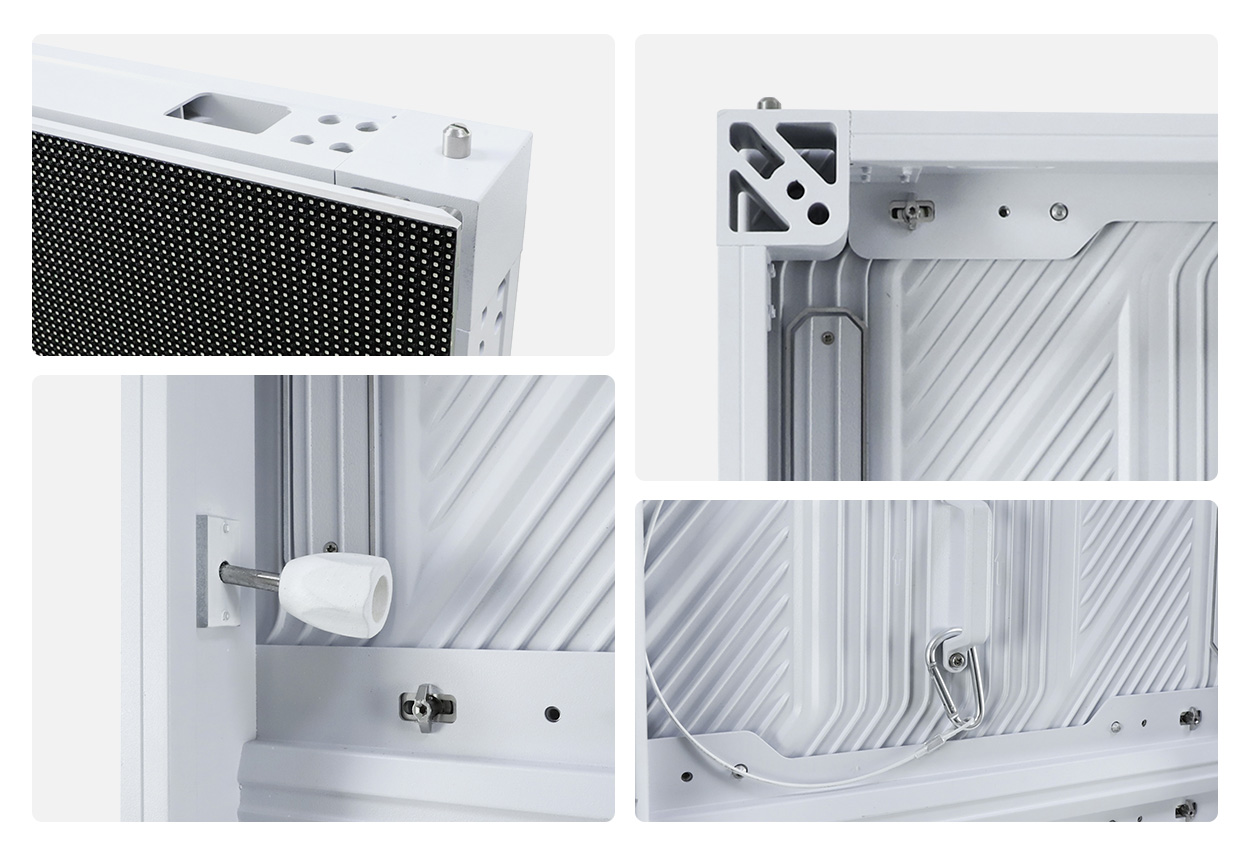
According to EagerLED’s EA1000F2 specifications, the cabinet is aluminium, weighs 28.4 kg, is rated IP65, allows module service from the front or the rear and refreshes at 3,840 Hz or more, which matters when TV or phone cameras film the screen. Weight adds up quickly: the 12 × 7 m board weighs about 2,386 kg and the 20 × 11 m board about 6,248 kg before any steel, which is why structure is a large part of an outdoor jumbotron project.
These prices cover the LED screen only. For a complete budget, see what installed cost adds to LED hardware, and for other outdoor sizes and pitches see the outdoor LED screen price guide.
Jumbotron sizes and resolution
There is no standard jumbotron size. Start from the venue: how far away the farthest seats are, where the screen can be mounted and what content it must show. Then choose a pitch for the nearest viewers, because pitch sets how many pixels the screen has.
Resolution is the screen width and height in millimetres divided by the pitch. For the same four sizes:
| Size | P10.41 | P7.81 | P6.25 | P3.91 |
|---|---|---|---|---|
| 6 × 3 m | 576 × 288 | 768 × 384 | 960 × 480 | 1536 × 768 |
| 8 × 5 m | 768 × 480 | 1024 × 640 | 1280 × 800 | 2048 × 1280 |
| 12 × 7 m | 1152 × 672 | 1536 × 896 | 1920 × 1120 | 3072 × 1792 |
| 20 × 11 m | 1920 × 1056 | 2560 × 1408 | 3200 × 1760 | 5120 × 2816 |
These counts look low next to a 4K TV, but most of a stadium crowd sits tens of metres from the board, and the far end of a field is more than 100 m away, too far to see individual pixels at P6–P10. Finer pitch costs more per square metre and adds detail that only close viewers notice. Choose it from the nearest seats and the smallest text you need to show, and check it with the pixel pitch and viewing distance guide.
Brightness matters more than resolution for a daytime game. An outdoor jumbotron used for daytime games is normally specified at 6,000–6,500 cd/m², the level of fixed billboards in daylight; the outdoor brightness comparison explains when 4,500 or 5,000 cd/m² is enough.
Indoor arena jumbotron: four-sided center-hung cost
The jumbotron above a basketball or hockey court usually hangs over centre court with a screen on each side, so every seat faces one. Indoors it needs far less brightness than outdoors, and viewers sit closer, so a finer pitch makes sense.
EagerLED’s EA640F2 specifications describe a 640 × 480 mm indoor cabinet, 60 mm deep and 7.5 kg, with full front service. Twelve cabinets across and nine high make a 7.68 × 4.32 m (25.2 × 14.2 ft) 16:9 face. Four faces total 132.7 m² (1,428 sq ft) and 432 cabinets weighing about 3,240 kg:
| Pitch | Price per m² | Four-face screen price | Resolution per face |
|---|---|---|---|
| P4 | US$511 | US$67,815 | 1920 × 1080 |
| P3.076 | US$588 | US$78,034 | 2496 × 1404 |
| P2.5 | US$684 | US$90,774 | 3072 × 1728 |
A center-hung jumbotron also needs a rigging frame and hoist or fixed suspension designed by a structural engineer, a processor that drives four faces (often with different content on each), and safe access for service above the court. Many arenas add a ring of narrow ribbon screens below the main faces; price those separately. For outdoor perimeter boards and venue-wide planning, see the stadium LED display cost guide.
Mini jumbotron for a home, bar or gym
“Mini jumbotron” usually means a small four-sided display that copies the arena look for a man cave, sports bar or gym. EagerLED’s jumbotron buying guide notes that a home mini-jumbotron is often made from several televisions, which leaves a frame at every edge where two screens meet.
A small LED version avoids the frames. With four EA640F2 cabinets on each face (two across, two high), each face is 1.28 × 0.96 m (4.2 × 3.1 ft) and the whole display uses 16 cabinets, about 120 kg:
- P3.076: about US$2,890 for the screen, 416 × 312 pixels per face.
- P2.5: about US$3,362 for the screen, 512 × 384 pixels per face.
That is a commercial build: it still needs a frame, a hanging point rated for the weight, a controller and a 220 V or 110 V power plan. For a single flat screen on a wall, a home or bar is usually better served by a small LED wall or a large TV; compare them in LED vs LCD video wall. Face sizes from 54 in to 116 in, with pitch, weight and power for each, are compared in the mini jumbotron guide.
What the screen price leaves out
For a permanent jumbotron these items change with the site, so get a written price for each one rather than adding an assumed percentage to the screen price:
- Structure: foundations, steel or a rigging frame, wind and load calculations, and a service walkway or lift access.
- Power: supply to the screen location, distribution boards and cabling sized for the screen’s maximum draw.
- Control: video processor, sending hardware, playback computer, camera and replay inputs, and any scoring or sponsor-scheduling software.
- Delivery and installation: freight, import charges, cranes, assembly, calibration, commissioning and operator training.
- Ownership: spare modules and power supplies, electricity, maintenance and warranty response times.
Ask every bidder to quote the same active size, pitch and brightness, and to mark each item as included, excluded or optional.
Should you buy or rent a jumbotron?
Rent for a single game, festival or one-off event: the rental company brings the screen, crew and often a trailer or ground support, and you pay per event. See LED screen rental prices and the LED screen trailer guide for mobile jumbotrons.
Buy when the screen will be used every week of the season or stays installed. A simple check: divide the up-front cost of owning by the difference between the rental price per event and your own operating cost per event. The answer is roughly how many events it takes before buying is cheaper. The LED wall lease vs purchase guide covers financing and lease options.
Jumbotron quote checklist
- A venue drawing with the screen location, mounting height and the nearest and farthest seats.
- Active screen width and height, aspect ratio and the smallest text that must be readable.
- Indoor or outdoor, sun direction and operating hours.
- Cabinet model, pitch, native resolution, brightness and front and rear IP ratings.
- Refresh rate and a filmed camera test if games are broadcast or streamed.
- Processor, inputs, replay and scoring integration, and redundancy for power and data.
- Structural design, access for service and who obtains permits.
- Spare modules, warranty terms and on-site response time.
Frequently asked questions
What is a jumbotron?
A jumbotron is a giant video screen used to show live action, replays, scores and advertising to a crowd at a stadium, arena or event. Modern jumbotrons are large LED video walls built from modular cabinets.
Why is it called a jumbotron?
The name began as a trademark for a giant video screen shown at the 1985 world exposition in Japan. It became the everyday word for any big stadium screen.
How much does a jumbotron cost?
The LED screen for a 6 × 3 m outdoor jumbotron costs about US$12,942–US$14,508, an 8 × 5 m board US$28,760–US$32,240, and a 20 × 11 m stadium board US$158,180–US$177,320. A four-sided indoor arena jumbotron costs US$67,815–US$90,774. Structure, power, control and installation are extra.
How big is a jumbotron?
There is no standard size. In the examples above, a fan zone or small field might use about 6 × 3 m, a high school field about 8 × 5 m and a large stadium a board 20 m wide or more. Size is set by the farthest viewing distance and the space available.
What pixel pitch does a jumbotron need?
Outdoor stadium jumbotrons typically use P6–P10, because the nearest seats are tens of metres away. Indoor arena jumbotrons, viewed from closer, typically use P2.5–P4.
Can I buy a mini jumbotron for my house?
Yes. Many mini jumbotrons are built from TVs, which leaves frames between the screens. A four-sided LED mini jumbotron with 1.28 × 0.96 m faces costs about US$2,890–US$3,362 for the screen, plus a frame, hanging point and controller.
Can you rent a jumbotron?
Yes. Rental LED screens and LED trailers are hired by the day for games, concerts and outdoor events, usually with a crew to set up and run them.
Send your venue drawing, screen size and viewing distances to request a jumbotron quote.
Check the details
Sources & references
Source pages can change. Access dates record when they were consulted.
- What is a jumbotron Accessed 9 November 2026
- Jumbotron screen guide Accessed 9 November 2026
- Jumbotron buying guide Accessed 9 November 2026
- EA1000F2 specifications Accessed 9 November 2026
- EA640F2 specifications Accessed 9 November 2026
Put these details into your project brief.
Tell EagerLED the application, destination and screen dimensions you have in mind.
Request a project quote